Welcome to DEXUAN
What is the difference between forged and cast heavy duty casters?
In the world of heavy - duty industrial equipment, casters play a crucial role in ensuring the mobility and functionality of various machinery and carts. As a leading heavy - duty caster supplier, I often encounter customers who are confused about the differences between forged and cast heavy - duty casters. This blog aims to provide a comprehensive understanding of these two types of casters, helping you make an informed decision when choosing the right ones for your specific needs.
Manufacturing Processes
The fundamental difference between forged and cast heavy - duty casters lies in their manufacturing processes.
Forged Casters
Forging is a manufacturing process where metal is heated to a malleable state and then shaped by applying compressive forces, typically using a hammer or a press. For heavy - duty casters, high - strength steel or alloy steel is commonly used. The forging process involves several steps. First, the raw material is heated in a furnace to a specific temperature, usually around 1100 - 1200 degrees Celsius for steel. This makes the metal soft enough to be shaped. Then, it is placed in a die and struck with a large force. This process aligns the grain structure of the metal in a continuous pattern, which significantly enhances the strength and toughness of the caster.
The forging process can be further divided into open - die forging and closed - die forging. Open - die forging is more suitable for simple shapes and is often used for initial shaping or pre - forming. Closed - die forging, on the other hand, uses a set of dies that enclose the heated metal, allowing for more precise shaping and better control of the final dimensions. For heavy - duty casters, closed - die forging is often preferred as it can produce casters with complex geometries and tight tolerances.
Cast Casters
Casting, in contrast, is a process where molten metal is poured into a mold and allowed to solidify. For heavy - duty casters, materials such as cast iron or aluminum alloy are frequently used. The casting process starts with melting the metal in a furnace at a temperature appropriate for the specific metal. For cast iron, the melting temperature is around 1200 - 1300 degrees Celsius. Once the metal is in a liquid state, it is carefully poured into a mold, which can be made of sand, ceramic, or metal.
There are different types of casting methods, including sand casting, investment casting, and die casting. Sand casting is the most common method for heavy - duty casters. It is relatively inexpensive and can produce large - sized casters. However, the surface finish and dimensional accuracy of sand - cast casters are usually lower compared to other casting methods. Investment casting, also known as lost - wax casting, offers high precision and a smooth surface finish but is more expensive and suitable for smaller, more intricate parts. Die casting is used when high - volume production and tight tolerances are required.
Physical Properties
The manufacturing processes also result in distinct physical properties for forged and cast heavy - duty casters.
Strength and Durability
Forged casters generally have higher strength and durability compared to cast casters. The continuous grain structure formed during the forging process gives forged casters excellent resistance to fatigue, impact, and wear. They can withstand heavy loads and repeated stress without deforming or breaking easily. For example, in applications where casters are used to move large, heavy machinery in a factory environment, forged casters are often the preferred choice as they can handle the constant movement and heavy weights over an extended period.
Cast casters, while still strong, have a more random grain structure due to the solidification process. This makes them more prone to cracking and chipping under high - stress conditions. However, in applications where the load is relatively stable and the stress is not extremely high, cast casters can provide sufficient strength at a lower cost.
Weight
Forged casters are usually heavier than cast casters. The forging process compresses the metal, making it denser. In some applications where weight is a critical factor, such as in aerospace or automotive industries where reducing weight can improve fuel efficiency, cast casters may be a better option. However, in most heavy - duty industrial applications, the additional weight of forged casters is not a significant drawback as it can contribute to the stability of the equipment.
Machinability
Cast casters are generally more machinable than forged casters. The random grain structure in cast metals makes them easier to cut, drill, and shape using conventional machining tools. This can be an advantage when customizing casters to meet specific requirements. For example, if a customer needs a caster with a special hole pattern or a non - standard shape, it may be easier and more cost - effective to machine a cast caster. Forged casters, with their continuous grain structure, require more specialized machining techniques and tools, which can increase the manufacturing cost.
Performance in Different Applications
The differences in physical properties translate into different performance characteristics in various applications.
High - Load Applications
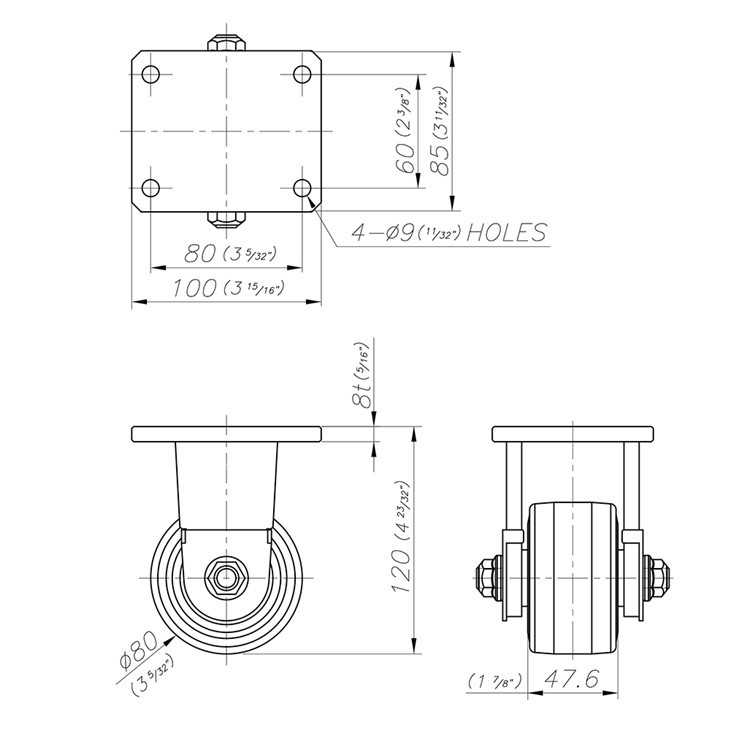
In high - load applications, such as moving large storage racks in a warehouse or transporting heavy equipment in a manufacturing plant, forged casters are the clear choice. Their high strength and durability allow them to support heavy weights without failing. For instance, a [Rigid Heavy Duty Caster](/heavy - duty - caster/rigid - heavy - duty - caster.html) made through forging can handle loads of several tons, ensuring smooth and reliable movement of the equipment.
Frequent Movement and Impact Applications
When casters are subjected to frequent movement and impacts, such as in a busy logistics center where carts are constantly being pushed and pulled, forged casters also perform better. Their resistance to fatigue and impact damage means they can last longer and require less maintenance. A [Swivel Heavy Duty Caster](/heavy - duty - caster/swivel - heavy - duty - caster.html) made by forging can easily withstand the continuous turning and jolting during operation.
Corrosive Environments
In corrosive environments, such as chemical plants or food processing facilities, the choice between forged and cast casters depends on the material used. If both are made of corrosion - resistant materials, cast casters may be more suitable in some cases. The casting process can produce casters with a more uniform surface finish, which can provide better protection against corrosion. However, forged casters made of high - quality stainless steel or alloy steel can also offer excellent corrosion resistance.
Cost Considerations
Cost is an important factor when choosing between forged and cast heavy - duty casters.
Manufacturing Cost
Forged casters generally have a higher manufacturing cost compared to cast casters. The forging process requires more energy, specialized equipment, and skilled labor. The raw materials used for forging, such as high - strength steel, are also more expensive. In contrast, casting is a relatively simpler and more cost - effective process, especially for large - scale production. The materials used for casting, such as cast iron, are often less expensive.
Total Cost of Ownership
When considering the total cost of ownership, which includes the initial purchase price, maintenance cost, and replacement cost, the choice may not be as straightforward. Although forged casters have a higher initial cost, their longer lifespan and lower maintenance requirements can result in a lower total cost of ownership in the long run, especially in high - stress applications. Cast casters, with their lower initial cost, may be a more economical choice for applications with lower stress and shorter service life requirements.
Conclusion
In summary, the choice between forged and cast heavy - duty casters depends on several factors, including the specific application, load requirements, environmental conditions, and cost considerations. Forged casters offer superior strength, durability, and performance in high - stress applications but come at a higher cost. Cast casters, on the other hand, are more cost - effective and suitable for applications with lower stress and less demanding performance requirements.
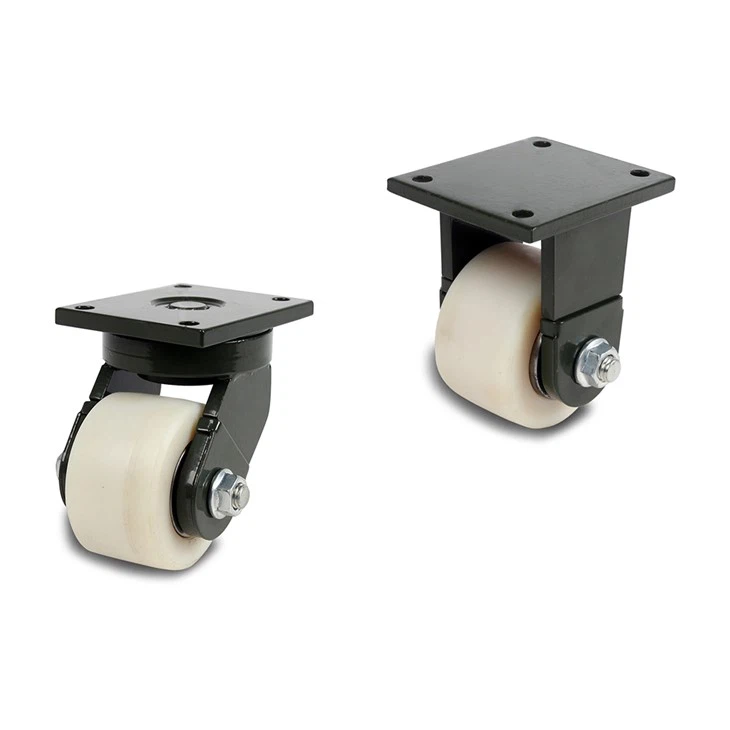
As a heavy - duty caster supplier, we understand the importance of providing the right casters for your needs. Whether you require [Rigid Heavy Duty Caster](/heavy - duty - caster/rigid - heavy - duty - caster.html) or [Swivel Heavy Duty Caster](/heavy - duty - caster/swivel - heavy - duty - caster.html), we have a wide range of products to choose from. If you are unsure which type of caster is best for your application, our team of experts is ready to assist you. Contact us to discuss your requirements and let us help you find the perfect heavy - duty casters for your business.
References
ASM Handbook, Volume 14A: Metalworking: Casting, ASM International.
Metals Handbook Desk Edition, 3rd Edition, ASM International.
Forging Industry Association Technical Papers.