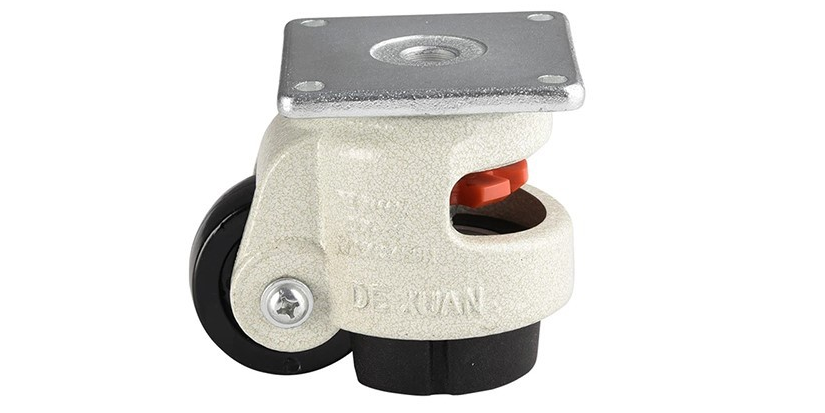
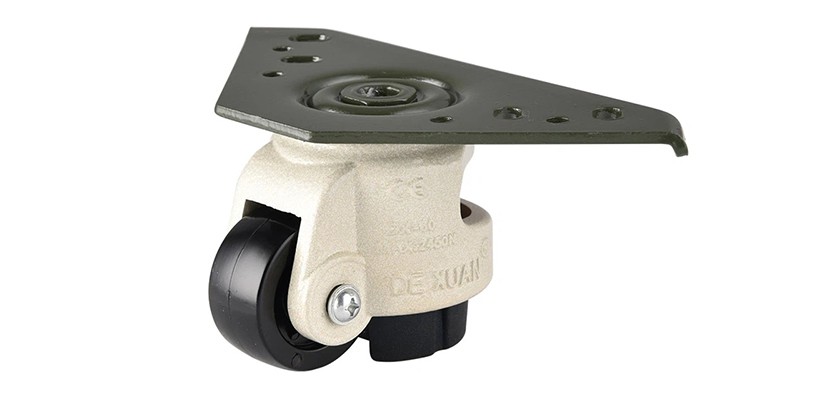
Welcome to DEXUAN
Proper Maintenance Of Casters Can Prolong Their Service Life
Users are responsible for the proper maintenance and operation of equipment with casters. To avoid improper use or equipment. Overloading is necessary, and heavy items should be placed lightly on the vehicle. High speed driving on rough roads or heavy objects hitting wheels can cause damage to wheels or equipment. Therefore, please check regularly.
Support and fasteners: Tighten the loose wheel axle and nut and inspect the welds or support plates for damage. Overloading or impact can cause the bracket to twist. The twisted bracket causes heavy loads to tilt and press on individual wheels, resulting in premature damage to the wheels. If it is a plug-in type caster, the nut should be tightened or firmly riveted to ensure that the equipment installation bracket is not bent and the plug-in rod is installed correctly.
When installing, lock nuts or anti loosening washers should be used. The installation of expansion rod casters should ensure that the rod is firmly installed inside the sleeve. Regular lubrication with lubricating oil can ensure long-term use of wheels and movable bearings. Applying lubricating grease to the friction areas of the axle seal ring and roller bearing can reduce friction and make rotation more flexible. Under normal circumstances, lubrication should be carried out every six months. After the car is cleaned every month, the wheels should be lubricated and visually inspected for wear. The poor rotation of the wheels is related to debris such as thin red ropes. The anti entanglement cover can block the entanglement of these debris.
The looseness or tightness of the casters is also another factor, replacing damaged wheels/casters to avoid unstable rotation. After inspecting and replacing the wheels, it is necessary to ensure that the axle is tightened with locking washers and nuts. Because a loose axle can cause friction and jamming between the wheel amplitude and the bracket. Replacement wheels and bearings should be available to avoid production downtime losses. If the steering of the casters is too loose, they must be replaced immediately. If the center rivet of the caster is fixed by a nut, it must be ensured that it is securely locked. If the movable steering cannot rotate freely, the ball should be checked for corrosion or dirt. If equipped with fixed casters, it is necessary to ensure that the wheel bracket is not bent.
Maintenance can be divided into three aspects: adding lubricating oil, removing entanglements in the running parts, and doing a good job in rust prevention and corrosion prevention. Specifically, they are:
1. The support steel ball running parts of the casters and the bearing running parts of the wheels should be lubricated regularly.
2. Regularly clean the winding or thread ends around the support steel ball running parts of the casters and the cloud mounted parts of the wheel bearings;
3. Most casters are made of metal, and rust prevention is crucial for the service life of casters. To prevent rust on casters, regular application of rust resistant paint and oil is recommended.